
Support Services
An extensive support team is available to address and support the physical, social, emotional and academic needs. The team facilitates and supports the development of learners and promotes the accommodation of the learner in the school and curriculum.
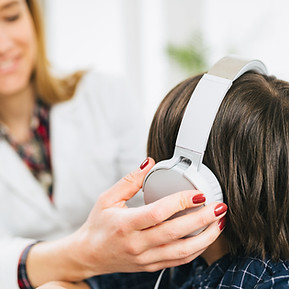
Speech- and hearing therapists and audiologists
Speech and hearing therapists and audiologists work within the multi-professional team in an integrated manner to improve learner communication, thinking and language skills. Learners with a delay or a deviation in speech, language, thinking or communication skills are seen for individual, small or class group therapy, according to the nature and extent of their challenges.
Learners with challenges regarding communication typically have the following diagnosis:
-
Specific learning impairment.
-
Specific language learning disabilities (significant delays in language development that include comprehension and/or verbal expression, reading, spelling and/or written language).
-
Verbal developmental apraxia, dysarthria, articulation and/or phonological disorders.
-
Fluency of speech and problems with stuttering.
-
Autistic spectrum disorder, hearing impairment as well as central auditory processing disorder.
Learners’ hearing is monitored, screened and tested to ensure that learners can function at an optimal level for effective learning. The status quo of learners with pre-diagnosed hearing problems are communicated to the parents through parent interviews, telephonically or via email. The status quo of learners with middle ear problems is evaluated for appropriate reference to a medical practitioner for diagnosis and treatment. Parents and learners are supported as mediators of the multi-professional team to understand and handle specific conditions and relevant challenges by providing them with information.
Intervention for the above-mentioned communication challenges is carried out in close collaboration with the class teacher and is available to learners from Grade R to Grade 12. The content and materials used during intervention are closely linked to the CAPS curriculum to facilitate the communication, generalization and simplification of learned concepts, vocabulary, thinking processes as well as facilitating subject content.
Occupational Therapy
The occupational therapists working at Jan Kriel School render services to learners from Grade R to Grade 12. As a member of the multi-disciplinary team, the occupational therapist strives to adopt a holistic approach to therapy. Occupational therapy is aimed at the treatment of learners with physical, developmental and/or learning disorders through: purposeful, graded activities; modification of equipment or methods and the development of pre-vocational skills to promote independence in activities of daily living in order to enable learners to participate in school activities (academic, sport and culture) and prepare them for life after school.

Grade R-3
The need for therapy is determined by means of relevant assessments and, on the basis of this, learners are involved in therapeutic interventions that take place during individual, small group and class group therapy sessions. The aim of occupational therapy is to promote the competence in functional performance areas such as self-care, academic performance and aspects of play relating to development and learning.
The following components are addressed during therapy:
-
Sensory-motor components: considering sensory processing and the effect it has on daily performances.
-
Components of postural control: considering the impact that muscle tone, strength, stability and co-ordination have on development and learning.
-
Motor skills: promoting the development of gross and fine motor skills needed to perform daily tasks.
-
Visual perception: promotion of the basic building blocks necessary for optimal understanding and learning.
-
Assistive devices: facilitation of independent and/or effective functioning.
Grade 4-6
In the Intermediate Phase learners receive therapy in small or class groups and/or individual therapy when required.. Therapy sessions are aimed at the development of visual perception, fine motor skills and sensory modulation.
Grade 7-12
Due to the large number of learners in the high school, the priorities for occupational therapy services become more selective.
Occupational therapy services in this section can include individual or group sessions aimed at the following:
-
Facilitation and support of the learning process by promoting executive functioning to enable the learner to access the curriculum and perform to his/her potential.
-
Adaptation of methods and/or apparatus to facilitate the participation and accommodation of physically disabled learners in academic and practical classes as well as other school activities.
-
Monitoring of optimal seating and positioning of wheelchair users in co-operation with the physiotherapists in order to prevent secondary complications.
-
Develop pre-vocational skills to ensure realistic future planning as well as preparation for entry into tertiary education and training facilities and/or the world of work for school leavers.
-
Monitoring of optimal seating and positioning of wheelchair users in co-operation with the physiotherapists in order to prevent secondary complications.
-
Occupational therapists are involved in coaching and organising sport for the physically disabled.
After Grade 12
Sporadic follow-up of former learners to support their suitable placement in tertiary education institutions, work environments and learnerships.
Student Training
Fourth year occupational therapy students from the University of Stellenbosch are placed at Jan Kriel School to complete part of their practical training under the supervision of the therapists employed by the school.

Physiotherapy
Physiotherapy services at Jan Kriel School are provided to learners from Grades R to 12 with specific needs and focuses on the development of motor skills.Physically disabled learners receive therapy that promotes independence and/or maintaining function.
Physiotherapy has the following purpose:
-
Identification, assessment, development and treatment of developmental disadvantages in learners from Grade R to Grade 3.
-
Therapy is offered on an individual and small group basis to develop and improve balance and motor functions.
-
Positioning and referral of physically disabled learners in wheelchairs to prevent secondary complications.
-
Therapy sessions to address the above are tailored to each learner’s specific needs.
-
Adjustments are made in classes through positioning of desks so that every learner is seated in the optimal position to support their attention and concentration.
-
Stretch and mobilization programs for physically disabled learners aim to improve or maintain muscle strength and extent of movement at the joints.
-
Treatment of sports injuries.
-
Sport for physically disabled people is offered as an extension of therapy and to contribute to the development of a balanced lifestyle.
-
Involvement in the quarterly assessment in the foundation phase.
Psychology
An extensive Psychology team is available to address and support the physical, social, emotional and academic needs.
Psychological services within the school include the following:
-
Psychometric assessment of learners where necessary.
-
Managing the database of learners who are candidates.
-
Short term emotional and psycho-social support to learners as well as guidance to parents. Learners and families get referred to private psychologists if longer term therapy is needed.
-
Coordinating learner discussions as well as discussions of applications for alternative assessment accommodations by the multi-disciplinary team of Jan Kriel School.
-
Receiving and processing of applications that are sent to the school via several WCED district offices. These applications are then discussed at a quarterly placement meeting in alliance with the WCED sifting committee to make decisions regarding these applications.
-
Handling enquiries regarding the admission criteria and application procedure for placement of a learner in a special school such as Jan Kriel.

Assessment Accommodation and Learning Support
SAALO and LOGO are Centres for Assessment Accommodation and Learning Support. Learners who need extra support or assistance with their studies and/or assessment tasks are identified and supported by educators who focus on individual assistance based on the learner’s specific needs. A learner support committee consisting of psychologists, therapists and educators meets on a regular basis to place learners who have been identified with a need for learning support at the correct aide. It may include a class assistant, occupational therapist, speech- language therapist or an expert in AA, depending on the learner’s needs.

Every learner admitted to Jan Kriel School is assessed by the multi-professional team to develop an individual support plan (ISP) as well as an individual education plan to the learner’s needs. Recommendations for AA’s are included in the ISP after having been submitted for approval to the Education Department for approval. Recommendations for AA may include the following:
Audio learning:
-
Some learners experience serious reading problems and function better when reading material is presented in auditory format. For these learners audio files are prepared and placed on a suitable device so that the learner can hear what is read.
Read and/or Write:
-
Reader and scribe are separate accommodations and can be recommended separately or in combination. Learners who have serious problems with reading and/or writing are placed with trained reader/scribes who read the text and/or take down the answers verbatim. This method is used during the term, as well as during test series and examinations for all assessment tasks (including the National Senior Certificate Examination).
-
All readers and scribes involved in formal assessment tasks, (e.g. tests and examinations) must undergo standardized training in order to obtain the necessary certificate from the WCED. Training workshops are hosted by the Jan Kriel School Resource Centre in collaboration with the WCED.
Computer (text-to-voice):
-
Text-to-voice is assistive technology that reads digital text aloud. Reading material can be scanned and then read with the help of the screen reader. The screen reader software is available in Afrikaans and English. Learners are trained to use this technology.
Computer (voice-to-text):
-
Voice-to-text refers to assistive technology that enables human speech to be converted into text. Work can be dictated to the computer, which then types it out. Unfortunately, the software that has been approved for use during the National Senior Certificate examination is only available in English.
Computer (typing):
-
Learners who experience problems with illegible handwriting, slow working tempo, coordination problems or physical disability can use a computer to type their answers, instead of writing.
Exam Pen:
-
The Exam Pen is a portable scanning pen that reads text aloud. The software is only available in English.
Additional Time:
-
A learner who experiences barriers to learning is entitled to additional time to empower him/her to give a true account of his/her knowledge.
Structure aid (“prompter/planner”) :
-
Learners who experience barriers to learning often struggle to organize their work space, especially during stressful situations such as tests and exams. These learners write in separate venues in smaller groups with a supervisor who assists the learners in organizing papers.

Sport at Jan Kriel
At Jan Kriel School, we provide a wide range of sports. Our primary aim is to introduce our learners to various sports while fostering a sense of belonging. We encourage all students to participate, regardless of their fears or limitations. The sports field is the place where a poor self-image can be restored and where the importance of practicing sport is cemented. It promotes character development, socialization and teamwork.
In Foundation Phase learners take part in ball games, soccer, cricket or rugby. Intermediate & Senior Phase learners can choose from the following:
Athletics (Track & field items)
Rugby
Netball
Swimming
Ball skills
Cricket
Soccer
Tennis
Tug of war
Meet the team

Grade R - 3

Grade 4-6

Grade 7-12
Admissions
The application process is controlled and administered by the Western Cape Education Department (WCED). No applications can be submitted directly to the school.
The application process starts at the mainstream school where the learner is placed. It is initiated by the principal in collaboration with the Learning Support Educator and School Based Support Team (SBST) as well as the psychologist of the relevant Education District Office. They complete the SIAS documents and attach all available documentation (e.g., reports from educators, therapists, psychologists, physicians and other professional role players). Thereafter, the application for admission to Jan Kriel School is directed to and managed by the Western Cape Education Department (WCED).